The frustration of a freshly cleaned carpet that remains stubbornly damp is a common woe for many homeowners. While the goal is a pristine, refreshed floor, lingering moisture can lead to unpleasant odors, mold growth, and even damage to your carpet and underlay. Understanding why your carpet cleaner leaves rugs wet and implementing effective strategies can transform your cleaning routine, ensuring a truly dry and hygienic result. This guide will walk you through the causes of over-wetting and provide actionable advice to achieve perfectly dry rugs every time.
Understanding the Causes of Over-Wet Carpets
A carpet cleaner’s primary function is to inject a cleaning solution and then extract it, along with loosened dirt and grime. While some residual moisture is normal and typically dries within a few hours, excessive wetness indicates an issue with the process or equipment. Several factors can contribute to your rugs staying wet after cleaning.
Firstly, applying too much cleaning solution is a primary culprit. An overabundance of liquid can saturate the carpet fibers and padding, making it difficult for the machine’s suction to remove it all. Secondly, insufficient extraction, often due to moving the carpet cleaner too quickly, prevents the vacuum from adequately pulling up the water and dissolved dirt. This leaves a significant amount of moisture behind. Poor machine maintenance, such as clogged filters, can also severely reduce a cleaner’s suction power, hindering its ability to extract water effectively. Finally, environmental factors like high humidity or cold temperatures can significantly slow down the natural drying process, leaving carpets damp for extended periods.
Choosing the Right Carpet Cleaner for Efficient Drying
Selecting a carpet cleaner with powerful extraction capabilities is the first step toward preventing overly wet rugs. Different types of carpet cleaners offer varying levels of moisture removal.
- Upright Carpet Cleaners: These are a popular choice for whole-room cleaning. High-quality upright models often feature strong suction motors designed to lift significant amounts of water. Their broad cleaning path can make efficient dry passes easier, but technique is still crucial.
- Canister Carpet Cleaners: Offering flexibility with various attachments, canister models can be excellent for targeted cleaning and extraction in tricky areas. Their powerful motors are often comparable to uprights, making them effective at moisture removal if used correctly.
- Handheld Carpet Cleaners: Primarily designed for spot treatment, these compact units have limited water tanks and suction power compared to larger machines. While they minimize over-wetting small areas, they are not suitable for drying large rugs.
- Robotic Carpet Cleaners: These are generally low-moisture devices, often relying on damp pads rather than extensive water injection and extraction. They leave very little moisture but are not designed for deep cleaning or heavy soil extraction, and therefore won’t be “leaving rugs wet” in the same sense as an extractor.
Regardless of the type, the key is to look for models renowned for their suction power and quick-drying technologies.
Essential Features for Quick-Drying Performance
When investing in a carpet cleaner, certain features are paramount for ensuring your rugs dry quickly and thoroughly.
Suction Power: This is arguably the most critical feature. A powerful motor translates to superior vacuum suction, which is essential for extracting as much water as possible from your carpet fibers and backing. Look for specifications that highlight strong CFM (Cubic Feet per Minute) or air watts, indicating robust airflow for extraction.
Nozzle and Cleaning Head Design: The design of the cleaning head plays a significant role in how effectively the suction can work. Wider nozzles can cover more ground, but they must maintain consistent suction across their width. Some advanced designs incorporate channels or squeegees that help funnel water efficiently into the suction path.
Water Tank Capacity: While a larger tank allows for more cleaning without refilling, it’s a double-edged sword. It can encourage users to apply more solution than necessary. However, separate tanks for clean and dirty water are standard and important. Adequate dirty water tank capacity ensures you can extract all the applied solution without interruption.
Heated Cleaning Technology: Some carpet cleaners feature internal heaters that warm the cleaning solution. Hot water can be more effective at breaking down dirt and stains, potentially reducing the need for excessive solution application and improving cleaning efficiency, which in turn aids in a cleaner dry.
Drying-Specific Modes or Airflow Features: Higher-end models sometimes include dedicated “dry-only” passes or enhanced airflow systems (e.g., built-in fans) to help circulate air over the cleaned area, significantly reducing drying times.
Comparing Carpet Cleaner Performance for Drying
When evaluating carpet cleaners, understanding how various models stack up in terms of drying efficiency is crucial. While specific brand comparisons require reviewing individual models, we can generalize performance based on feature sets commonly found across different price points.
High-end professional-grade machines typically offer the strongest suction and may incorporate advanced drying technologies, resulting in significantly shorter drying times. Mid-range consumer models often strike a balance, providing good suction and effective cleaning, usually with drying times ranging from 4-8 hours. Entry-level machines, while more affordable, might have less powerful motors, requiring more diligent dry passes and longer drying periods.
It’s important to note that professional carpet cleaning services often utilize high-powered extraction equipment and employ techniques specifically aimed at minimizing drying time, usually leaving carpets dry within 2-4 hours.
| Feature | Entry-Level Cleaners | Mid-Range Cleaners | High-End Cleaners |
|---|---|---|---|
| Suction Power | Moderate | Good | Excellent |
| Drying Efficiency | Basic airflow | Enhanced airflow | Dedicated drying modes |
| Tank Capacity | Small to Medium | Medium | Large |
| Ease of Use | Simple | Good | Advanced |
| Price Range | Low | Medium | High |
Your Smart Buying Guide for a Drier Clean
Making an informed decision when purchasing a carpet cleaner can significantly impact how quickly your rugs dry. Consider these factors before you buy:
- Assess Your Needs: How large are your rugs or carpeted areas? How frequently will you clean them? For extensive or frequent cleaning, investing in a machine with robust suction and a larger dirty water tank is wise. For occasional spot cleaning, a less powerful machine may suffice, provided you manage moisture diligently.
- Set Your Budget: Carpet cleaners range widely in price. While entry-level models are budget-friendly, they may require more effort and time to achieve a dry finish. Higher-priced models often justify their cost with superior features like powerful suction, faster drying times, and enhanced durability.
- Read Reviews and Compare Products: Always consult user reviews and independent product comparisons. Pay close attention to comments specifically addressing drying time and the machine’s ability to extract water effectively. Look for models praised for leaving carpets “barely damp” or “drying quickly.”
- Buy from Reputable Retailers: Purchase your carpet cleaner from established stores or online retailers that offer good warranties and customer support. This ensures you can address any issues related to performance or malfunctions.
Expert Tips for Using and Maintaining Your Carpet Cleaner to Prevent Wetness
Even the best carpet cleaner requires proper technique and maintenance to ensure rugs dry quickly and completely.
1. Don’t Over-Wet the Carpet: This is perhaps the most crucial tip. Follow the manufacturer’s guidelines for mixing and applying the cleaning solution. Avoid pressing the spray trigger excessively or making too many wet passes over the same area. The goal is to apply enough solution to clean, not to saturate.
2. Perform Multiple Dry Passes: After spraying and agitating, make several passes over the same area without pressing the spray button. This allows the machine’s powerful vacuum to extract as much moisture as possible. Move the cleaner slowly and deliberately to give the suction time to work effectively. Many experts recommend at least two to three dry passes for every wet pass.
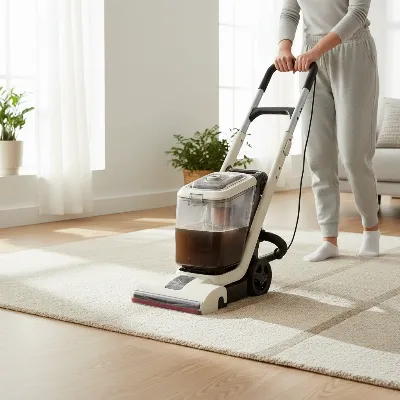 A user performing dry passes with a carpet cleaner over a beige rug, showing extracted dirty water in the tank.
3. Keep Your Machine Clean and Maintained: Regularly clean the recovery tank, nozzle, and filters. Clogged filters can drastically reduce suction power, directly impacting the machine’s ability to extract water. Rinse the dome filter to maximize suction power and airflow before starting.
4. Prepare the Area Thoroughly: Vacuum the carpet thoroughly before deep cleaning. Removing loose dirt and debris means the cleaner can focus its efforts on extracting moisture and embedded grime, not picking up surface litter.
5. Maximize Airflow and Ventilation: Once cleaning is complete, focus on drying the carpet. Open windows and doors if the outdoor humidity is low to allow for fresh air circulation. Use portable fans or ceiling fans to create cross-ventilation and circulate air directly over the cleaned area.
6. Control Room Temperature and Humidity: If it’s humid outside, avoid opening windows, as this can slow drying. Instead, use a dehumidifier to pull moisture from the air and the carpet. Running your air conditioning can also help reduce humidity. In colder weather, maintaining a comfortable, moderate room temperature (around 70-75°F or 20-24°C) can aid evaporation.
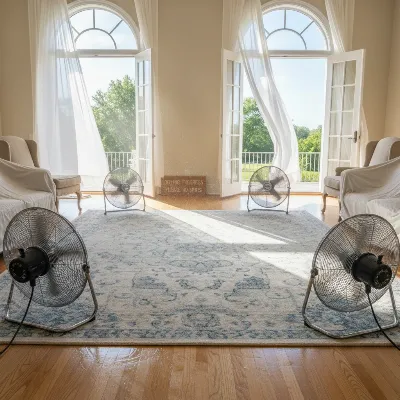 A living room with fans running, windows open, and a carpet drying after cleaning, emphasizing effective ventilation.
7. Avoid Walking on Damp Carpet: Refrain from walking on the carpet until it is completely dry. Foot traffic on damp fibers can flatten the pile, reintroduce dirt, and slow down the drying process.
> “The secret to a truly clean carpet isn’t just about what goes in, but how thoroughly you get it out. Proper extraction is paramount, otherwise, you’re just inviting mold.” – John Smith, Senior Carpet Care Technician
Conclusion
Achieving a clean, dry carpet after using a carpet cleaner is entirely within reach with the right approach. By understanding the common pitfalls of over-wetting, selecting a machine with robust suction, and meticulously following proper usage and drying techniques, you can ensure your rugs are not only spotless but also quickly dry and ready for use. Remember, patience and proper ventilation are your greatest allies in avoiding the problems associated with lingering moisture. What adjustments will you make to your carpet cleaning routine to ensure perfectly dry rugs?
Frequently Asked Questions
How long should it take for a carpet to dry after cleaning?
|
Our Picks for the Best Carpet Cleaner in 2026
As an Amazon Associate I earn from qualifying purchases.
|
||
| Num | Product | Action |
|---|---|---|
| 1 | Hoover PowerDash Pet+ Compact Carpet Cleaner Machine, Lightweight Carpet Shampooer Machine, Pair with a Hoover Carpet Cleaner Solution for a Bright, Refreshed Home |

|
| 2 | Portable Carpet and Upholstery Cleaner, 15Kpa Spot Cleaner Machine for Pets, Furniture Cleaner for Sofa, Area Rugs, Couch and Car, Carpet Cleaning Machine with Dual Brush Heads & Self-Cleaning System |
|
| 3 | BISSELL TurboClean Pet XL Upright Carpet Cleaner, Upholstery Tough Stain Tool & Formula included, 3746 |
|
| 4 | Hoover PowerDash Pet Advanced Compact Carpet Cleaner Machine with Above Floor Cleaning, Lightweight Carpet Shampooer Machine, Pair with a Hoover Carpet Cleaner Solution for a Bright, Refreshed Home |
|
| 5 | Vacmaster SCB301 400 Series Portable Carpet & Upholstery Spot Cleaner Machine, 15Kpa Power Suction with Versatile Tools for Pets, Area Rugs and Couches |
|
| 6 | BISSELL® Little Green® Max Pet Portable Carpet and Upholstery Deep Cleaner, Car/Auto Detailer, with Self-Cleaning Tough Stain Tool and Pet Hair Removal Tool (3860) |
|
| 7 | Kenmore KW4010 Pet Portable Carpet Cleaner Machine with High Cleaning Power, 3.2L Clean Tank & 1.4L Dirty Tank, 25ft Cord Length and Two Easy Removable Brushroll for Rug & Upholstery |
|
| 8 | Shark R-EX205 CarpetXpert Carpet, Area Rug & Upholstery Cleaner with StainStriker, Built-in Spot & Stain Cleaner, Teal - Certified , EX200 Series (Renewed) |
|
| 9 | Shark StainStriker Portable Carpet Upholstery & Area Rug Cleaner, Stain & Odor Remover, Perfect for Car Interiors, Nordic Blue, PX202BRN |
|
| 10 | BISSELL Little Green Mini Portable Carpet and Upholstery Deep Cleaner, Car/Auto Detailer, with HydroRinse Self-Cleaning Tool and 4" Tough Stain Tool, Tea Green, 4075 |
|
Typically, carpets should dry within 6 to 12 hours after professional cleaning, though this can vary depending on carpet thickness, fiber type, indoor temperature, humidity levels, and ventilation. With optimal conditions and proper technique, some carpets can be dry in as little as 2-4 hours.
What are the signs of an over-wet carpet?
Signs of an over-wet carpet include a noticeably damp or squishy feel when walking on it, a persistent musty odor, and the reappearance of stains (known as wicking) as moisture pulls soil from the carpet backing to the surface during drying. If your carpet is still damp after 24 hours, it’s likely over-wet.
