Descaling your carpet cleaner safely at home is essential for maintaining its performance and extending its lifespan. Mineral deposits from hard water, known as limescale, can accumulate inside the machine, reducing spray pressure and clogging lines. You can effectively descale your carpet cleaner using a simple DIY method with white vinegar, which is a safe and readily available solution for dissolving these mineral buildups.
This guide will explain how limescale impacts your machine, how to choose the right descaling agent, and provide a step-by-step process to restore your carpet cleaner to optimal condition.
Understanding Limescale and Its Impact on Your Carpet Cleaner
Limescale is a hard, chalky deposit, primarily composed of calcium carbonate, that forms when hard water evaporates, leaving behind mineral residues. If your home has hard water, you’ve likely seen these white, crusty deposits on faucets, showerheads, or inside kettles. The same phenomenon occurs within the internal mechanisms of your carpet cleaner, especially in areas where water is heated or continuously flows.
This buildup can lead to several problems:
- Reduced Spray Pressure: Limescale clogs spray nozzles and internal hoses, preventing your machine from effectively applying cleaning solution to your carpets. This means less cleaning power and more effort on your part.
- Impaired Heating Element: For machines with a heating function, limescale acts as an insulator, reducing the efficiency of the heater and potentially causing it to work harder and burn out faster.
- Clogged Pumps and Hoses: Mineral deposits can obstruct the pump and solution lines, leading to decreased water flow and strain on the motor, which can eventually cause mechanical failure.
- Shortened Lifespan: The constant struggle against limescale buildup puts undue stress on all internal components, leading to premature wear and tear and an overall shorter lifespan for your appliance.
Recognizing the signs that your machine needs descaling is crucial. Look for a noticeable drop in spray pressure, inconsistent water flow, or even unusual noises coming from the pump. If you’re experiencing any of these issues, it’s a clear indicator that limescale is likely impeding your carpet cleaner’s performance.
Choosing Your DIY Descaling Agent: White Vinegar
When it comes to safe and effective DIY descaling agents, white vinegar stands out as an excellent choice for home carpet cleaners. Its acetic acid content is highly effective at dissolving mineral deposits without using harsh chemicals that could damage your machine or leave behind harmful residues. It’s also widely available, inexpensive, and generally safe for use in many household appliances.
You might wonder about the ideal concentration to use. For most home carpet cleaners and typical limescale buildup, a diluted solution of white vinegar is usually sufficient. However, for heavily scaled machines, a stronger concentration or even pure white vinegar can be used, but always with caution and followed by thorough flushing. The key is to allow the acid enough time to work on the deposits.
It is absolutely critical to avoid mixing white vinegar with other cleaning chemicals, especially bleach. Mixing vinegar with bleach creates toxic chlorine gas, which is extremely dangerous to inhale. Always ensure your carpet cleaner’s tanks are completely empty and rinsed before introducing any descaling solution. Stick to white vinegar and water for descaling to ensure safety.
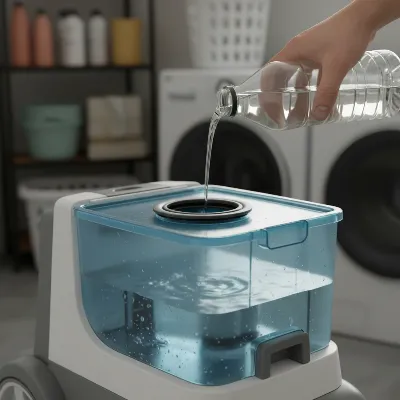 White vinegar being poured into a carpet cleaner tank for descaling
Essential Tools and Safety Precautions
Before you begin the descaling process, gather these simple tools and keep essential safety precautions in mind:
Tools You’ll Need:
- White Vinegar: The primary descaling agent.
- Fresh Water: For rinsing and dilution.
- Buckets or a Sink: To collect the descaling solution and flush water.
- Old Towels: To wipe up any spills.
- Optional – Funnel: To easily pour vinegar into the tank without spilling.
- Optional – Paper Clip or Thin Wire: For clearing stubborn clogs in spray nozzles.
- Protective Gloves: To protect your hands from prolonged contact with vinegar, especially if you have sensitive skin.
Safety First:
- Unplug and Cool Down: Always ensure your carpet cleaner is turned off and unplugged from the power outlet. If it’s been recently used, allow it to cool down completely before handling any parts. Working on a heated system can be dangerous and ineffective.
- Ventilation: Ensure you are working in a well-ventilated area. While white vinegar is not toxic, its strong odor can be unpleasant in enclosed spaces. Open windows or use a fan.
- Read Your Manual: If you still have your carpet cleaner’s user manual, consult it for any specific descaling instructions or warnings from the manufacturer. Some machines may have components that are sensitive to certain acids.
- No Mixing Chemicals: As mentioned, never mix vinegar with bleach or other chemical cleaners.
Step-by-Step Guide to Descaling Your Carpet Cleaner
Follow these steps carefully to descale your carpet cleaner effectively and safely:
Step 1: Prepare Your Machine
|
Our Picks for the Best Carpet Cleaner in 2026
As an Amazon Associate I earn from qualifying purchases.
|
||
| Num | Product | Action |
|---|---|---|
| 1 | Shark StainStriker Portable Carpet Upholstery & Area Rug Cleaner, Stain & Odor Remover, Perfect for Car Interiors, Nordic Blue, PX202BRN |

|
| 2 | BISSELL® Little Green® Max Pet Portable Carpet and Upholstery Deep Cleaner, Car/Auto Detailer, with Self-Cleaning Tough Stain Tool and Pet Hair Removal Tool (3860) |
|
| 3 | Shark R-EX205 CarpetXpert Carpet, Area Rug & Upholstery Cleaner with StainStriker, Built-in Spot & Stain Cleaner, Teal - Certified , EX200 Series (Renewed) |
|
| 4 | Kenmore KW4010 Pet Portable Carpet Cleaner Machine with High Cleaning Power, 3.2L Clean Tank & 1.4L Dirty Tank, 25ft Cord Length and Two Easy Removable Brushroll for Rug & Upholstery |
|
| 5 | Hoover PowerDash Pet Advanced Compact Carpet Cleaner Machine with Above Floor Cleaning, Lightweight Carpet Shampooer Machine, Pair with a Hoover Carpet Cleaner Solution for a Bright, Refreshed Home |
|
| 6 | Portable Carpet and Upholstery Cleaner, 15Kpa Spot Cleaner Machine for Pets, Furniture Cleaner for Sofa, Area Rugs, Couch and Car, Carpet Cleaning Machine with Dual Brush Heads & Self-Cleaning System |
|
| 7 | Hoover PowerDash Pet+ Compact Carpet Cleaner Machine, Lightweight Carpet Shampooer Machine, Pair with a Hoover Carpet Cleaner Solution for a Bright, Refreshed Home |
|
| 8 | BISSELL Little Green Mini Portable Carpet and Upholstery Deep Cleaner, Car/Auto Detailer, with HydroRinse Self-Cleaning Tool and 4" Tough Stain Tool, Tea Green, 4075 |
|
| 9 | Vacmaster SCB301 400 Series Portable Carpet & Upholstery Spot Cleaner Machine, 15Kpa Power Suction with Versatile Tools for Pets, Area Rugs and Couches |
|
| 10 | BISSELL TurboClean Pet XL Upright Carpet Cleaner, Upholstery Tough Stain Tool & Formula included, 3746 |
|
First, ensure your carpet cleaner is turned off and completely unplugged from the power source. This is a crucial safety step. Next, remove both the clean water and dirty water tanks from the machine. Empty any remaining liquid from both tanks and rinse them thoroughly with fresh water to remove any residual cleaning solution or debris. If your machine has detachable nozzles, brushes, or other accessories, remove them and set them aside for separate cleaning later.
Step 2: Create the Descaling Solution
For a typical home carpet cleaner, a 1:1 ratio of white vinegar to water is a good starting point for your descaling solution. For example, if your clean water tank holds one gallon, mix half a gallon of white vinegar with half a gallon of warm water. For lighter buildup, a 1:2 ratio (one part vinegar to two parts water) might suffice. If you suspect severe scaling, you may use a higher concentration of vinegar or even pure vinegar, but proceed with caution and ensure thorough rinsing afterward. Pour this mixture into the clean water tank of your carpet cleaner.
Step 3: Circulate and Soak
Place the clean water tank back onto your carpet cleaner. Now, you need to circulate the descaling solution through the internal components. Without spraying onto your carpet, turn on the machine’s pump for about 1 to 2 minutes. You can either direct the spray wand into a large bucket or a utility sink to collect the solution, or if your machine allows, run it in a reclined position. This circulation ensures the vinegar solution reaches all parts of the spray lines, pump, and heating element where limescale accumulates. After circulating, turn off the machine and let the solution sit inside for at least 15 to 30 minutes. For heavily scaled machines, you can let it soak for a few hours, or even overnight, allowing the acid ample time to break down stubborn mineral deposits.
“Regular descaling is paramount for maintaining optimal spray pressure and extending the lifespan of your carpet cleaner’s pump and heating elements. Ignoring limescale is like running a car without oil – it’s a slow path to breakdown.” – John Davis, Appliance Repair Specialist
Step 4: Flush the System Thoroughly
Once the soaking period is complete, remove the clean water tank containing the descaling solution and carefully empty it. Rinse the tank thoroughly with fresh water. Now, fill the clean water tank only with fresh, clean water. Reattach it to the machine. Run the carpet cleaner again, spraying the clean water into a bucket or sink, or onto an inconspicuous, non-carpeted area, until the tank is empty. Repeat this flushing process at least two to three more times, using fresh water each time, until you no longer detect any vinegar smell and the water being expelled is completely clear, with no visible residue. This step is crucial to ensure all acidic descaling solution and loosened mineral deposits are completely flushed from the system.
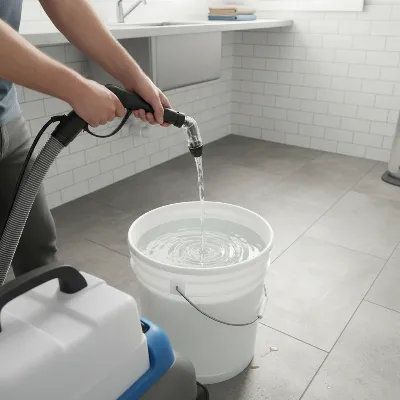 Flushing a carpet cleaner with clear water after descaling
Step 5: Clean Attachments and Reassemble
While the machine is soaking or being flushed, take the opportunity to clean any detachable parts you removed earlier, such as nozzles, brush rolls, and the dirty water tank. Rinse them well under warm water. If you notice any visible clogs in the spray nozzles, carefully use a paper clip or a thin wire to dislodge the debris. Ensure all parts are thoroughly rinsed and free of scale or cleaner residue. Once all parts are clean and the machine has been fully flushed, reassemble your carpet cleaner. It should now be free of limescale and ready to perform at its best.
Maintaining Your Carpet Cleaner to Prevent Future Limescale Buildup
Preventing limescale buildup is easier than removing it. By adopting a few simple maintenance habits, you can significantly prolong the life and efficiency of your carpet cleaner.
Firstly, consider using filtered or distilled water in your carpet cleaner if you live in an area with very hard water. While not always practical for every use, it can dramatically reduce mineral accumulation over time. Even switching to filtered water occasionally can make a difference.
Secondly, and most importantly, establish a routine of flushing your machine with clean water after every single use. This simple step helps to rinse away any lingering cleaning solution and loose mineral particles before they have a chance to solidify and create new deposits. Just fill the clean water tank with plain water and run it through the system until the tank is empty, directing the spray into a bucket or sink.
Finally, implement a regular descaling schedule. Depending on the hardness of your water and how frequently you use your carpet cleaner, descaling every 3 to 6 months is a good general guideline. If you use your machine weekly or have exceptionally hard water, you might consider more frequent descaling. Proper storage in a dry place will also protect your machine from other types of deterioration.
Conclusion
Descaling your carpet cleaner is a vital, yet often overlooked, aspect of appliance maintenance that can significantly enhance its performance and extend its lifespan. By understanding the damaging effects of limescale and employing a simple, safe DIY method using white vinegar, you can keep your machine running efficiently. Following the step-by-step guide – from preparing your machine and circulating the descaling solution to thorough flushing and cleaning attachments – ensures you effectively eliminate mineral buildup. Remember to make regular maintenance, including flushing with clean water after each use, a habit to prevent future issues. Investing a little time in caring for your carpet cleaner will pay off with consistently cleaner carpets and a reliable machine.
What are your go-to maintenance tips for keeping household appliances in top shape?
Frequently Asked Questions
Frequently Asked Questions
Can I use other descaling agents like citric acid for my carpet cleaner?
Yes, citric acid is another effective natural descaling agent. You can typically mix 1-2 tablespoons of citric acid powder with a gallon of warm water to create a descaling solution, following the same circulation, soak, and flush steps as with vinegar. Always ensure to rinse thoroughly after use.
How often should I descale my carpet cleaner to prevent buildup?
The frequency of descaling depends on your water hardness and usage. For hard water areas or frequent use (monthly), consider descaling every 3-6 months. If your water is softer or you use the machine less often, every 6-12 months might suffice. Look for signs like reduced spray pressure as an indicator.
What if descaling doesn't improve my carpet cleaner's performance?
If descaling doesn't resolve performance issues, the problem might be more complex than limescale. It could indicate a faulty pump, a broken hose, or other internal damage. In such cases, consulting the manufacturer's troubleshooting guide or seeking professional repair is recommended.
Is descaling with white vinegar safe for all carpet cleaner brands?
White vinegar is generally safe for most major carpet cleaner brands, as its mild acidity is not typically corrosive to the plastics and metals used in these machines. However, it's always best to check your specific model's user manual for any manufacturer-specific descaling recommendations or warnings before proceeding.
Can I use bleach to clean or descale my carpet cleaner?
No, never use bleach to clean or descale your carpet cleaner. Bleach can damage internal components, seals, and hoses, and it should absolutely never be mixed with acidic solutions like vinegar, as it can produce dangerous chlorine gas. Stick to recommended descaling agents or plain water for flushing.
How to Descale Your Carpet Cleaner
Follow these steps to safely and effectively remove limescale buildup from your carpet cleaner using white vinegar, restoring its performance and extending its lifespan.
Turn off and unplug your carpet cleaner. Remove and empty both the clean and dirty water tanks, rinsing them thoroughly. Detach any nozzles, brushes, or accessories for separate cleaning later.
Mix white vinegar with warm water in a 1:1 ratio for typical buildup (e.g., half a gallon of vinegar with half a gallon of water for a one-gallon tank). For lighter buildup, a 1:2 ratio may suffice. Pour this mixture into the clean water tank.
Place the clean water tank back on the machine. Turn on the pump for 1-2 minutes, directing the spray into a bucket or sink to circulate the solution through the internal components. Turn off the machine and let the solution soak for at least 15-30 minutes, or several hours for heavy scaling.
Empty and rinse the clean water tank. Fill it with fresh, clean water and run the machine, spraying into a bucket or sink, until the tank is empty. Repeat this flushing process 2-3 more times with fresh water until no vinegar smell or residue is detected.
While the machine is soaking or flushing, clean any detachable parts like nozzles and brush rolls under warm water. Use a paper clip for stubborn clogs in spray nozzles. Once all parts are clean and the machine is fully flushed, reassemble your carpet cleaner.

This was exactly what I needed! My machine was definitely suffering from those chalky deposits, and I was about to buy a new one. Following the guide to restore it to optimal condition saved me a ton of money. It’s great to know I can maintain its performance easily at home.
I’ve been noticing my carpet cleaner wasn’t spraying as strong lately, and I suspected it was due to our hard water. This guide on using white vinegar was a lifesaver! The step-by-step process was super clear, and now my machine is working like new. Definitely recommend giving this a try if you’re experiencing reduced spray pressure.
I always worried about damaging my carpet cleaner, so I put off descaling it. Learning that limescale is mainly calcium carbonate and how it impacts the machine really motivated me. The DIY method with vinegar was surprisingly effective and much simpler than I thought. My carpets are looking much better after a proper clean with a fully functional machine!
The instructions for descaling with white vinegar were easy enough to follow, and it did help a bit with the clogging. However, I still had some stubborn mineral deposits that didn’t completely clear out. I might need to try a stronger commercial descaling agent next time, especially since my machine is pretty old.