A carpet cleaner typically leaks water due to five main reasons: improperly seated water tanks, cracks in the tanks, worn seals or gaskets, clogs in hoses or nozzles, or internal valve/pump malfunctions. Addressing these issues promptly can prevent damage to flooring and the machine itself, often requiring simple adjustments or part replacements.
Understanding the root cause is the first step to resolving any issue with your carpet cleaner. Often, the problem isn’t as severe as it seems and can be remedied with a few simple checks and adjustments. Ignoring a leak, however minor, can lead to more significant internal damage over time, including electrical issues, so it’s always best to address it promptly.
Identifying the Source of Your Carpet Cleaner Leak
Before you can fix the leak, pinpointing its origin is crucial. A leak can manifest in various ways: water dripping as soon as you fill the tank, during operation, or even when the machine is turned off. Observing when and where the water appears can provide valuable clues about the underlying problem. Common points of leakage include around the water tanks, hose connections, or directly from the base of the unit.
1. Check and Reseat Water Tanks and Caps
One of the most frequent causes of a leaking carpet cleaner is a water tank that isn’t properly seated or secured. Both the clean and dirty water tanks need to form a tight seal with the machine to prevent water from escaping during operation.
Often, users mistakenly believe their tank is in place when it’s slightly misaligned. If the tank is not sitting flush or feels wobbly, water can easily seep out. Similarly, a loose cap on either tank will allow water to splash or drip, especially when the machine is in motion or under pressure.
Quick Fix: Remove both the clean and dirty water tanks from your carpet cleaner. Inspect them for any debris that might prevent a proper seal, then firmly reinsert each tank, ensuring it clicks securely into place. Double-check that all caps are tightened clockwise until they are flush and secure. Many models require a specific alignment to engage the internal valves correctly, preventing drips. Always fill tanks only up to the “Max” fill line to avoid overflow.
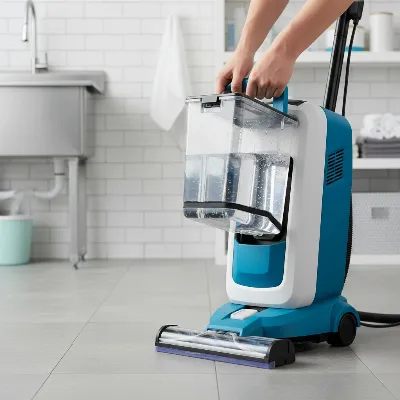 A person firmly reseating a clear water tank onto a carpet cleaner, checking for proper alignment and a secure fit. The tank is transparent, showing the water level, with a hand pressing down on it.
2. Inspect for Cracks or Damage in Tanks
While built to be durable, plastic water tanks can develop cracks over time. These cracks might be the result of accidental drops, impacts, exposure to extreme temperatures, or simply general wear and tear from repeated use. Even a hairline crack can allow a steady stream of water to escape, creating puddles on your floor.
It’s important to differentiate between a tank that is merely wet on the outside from one that is structurally compromised. A truly cracked tank will leak consistently, regardless of how well it’s seated or if its cap is tight.
Quick Fix: Carefully remove and visually inspect both the clean and dirty water tanks. Look closely for any hairline cracks, stress fractures, or signs of damage, especially around the edges, seams, and where the caps screw on. Fill the suspected tank with water over a sink and watch for drips. If you find a crack, the tank will need to be replaced. Attempting to patch a cracked tank is rarely a lasting solution and can lead to further leaks.
3. Examine and Replace Worn Seals or Gaskets
Rubber seals and O-rings are critical components designed to create watertight connections throughout your carpet cleaner. These small but mighty gaskets are found where tanks connect, within hose attachments, and around internal valves. Over time, these rubber components can become stiff, cracked, compressed, or even go missing, leading to leaks.
When seals degrade, they lose their ability to create a tight barrier, allowing water to escape from various points, often manifesting as drips from the bottom of the machine or inconsistent spray patterns. This is a common issue, particularly in older carpet cleaners.
Quick Fix: Systematically inspect all visible rubber seals and O-rings. Pay close attention to the seals on the bottom of the water tanks, where hoses connect to the main unit, and around any removable nozzles. If a seal appears dry, brittle, cracked, missing, or squashed, it’s likely the culprit. Replacement seals are often available from the manufacturer or third-party suppliers. Replacing these worn-out components can restore your machine’s watertight integrity.
4. Clear Clogs in Hoses, Nozzles, and Filters
Internal blockages are another common cause of leaks. If hoses, spray nozzles, or filters become clogged with dirt, debris, or dried detergent, it can create pressure buildup within the system. This increased pressure can force water out through weak points, such as connections or seals, that would otherwise hold firm.
Clogged spray nozzles, in particular, can prevent proper dispensing of cleaning solution, leading to water pooling or leaking from the nozzle area instead of being applied to the carpet. A full dirty water tank can also cause suction issues and potential overflow.
Quick Fix: Disconnect and thoroughly clean all hoses, paying attention to any bends or internal sections where debris might accumulate. Clear any blockages from the spray nozzles using a small brush or by rinsing under warm water (avoid poking with sharp objects which can cause damage). Remove and clean or replace filters as per your machine’s manual. Ensure the dirty water tank is emptied completely after each use, as an overfull tank can lead to water backing up and leaking. Using only manufacturer-recommended detergents can also prevent clogs from chemical residue.
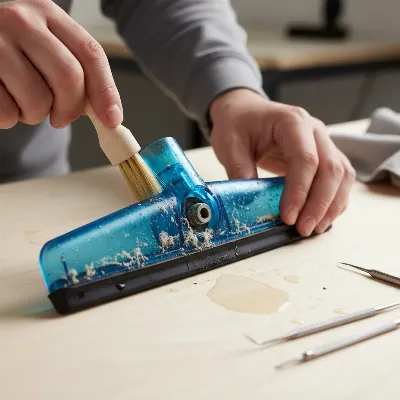 A person using a small brush to clean a clogged nozzle of a carpet cleaner, ensuring all debris is removed. The cleaner is disassembled with the nozzle visible.
5. Assess Internal Valves or Pumps
If you’ve checked all the external components and your carpet cleaner continues to leak, the problem might be more complex, residing within the machine’s internal pump or valves. These components are responsible for drawing clean water and solution from the tank, pushing it through the spray mechanism, and then directing dirty water into the recovery tank.
A malfunctioning pump or a faulty internal valve can lead to water leaking from inside the unit, often accompanied by symptoms like weak suction or inconsistent spray. Such issues can be serious and, if ignored, potentially lead to damage to the motor or other electrical components.
Quick Fix: While some minor valve issues, like a stuck dispensing valve, can sometimes be reset by gently pressing it a few times (as shown in some manufacturer troubleshooting videos), significant pump or valve failures typically require professional attention. If water leaks from within the main body of the machine, even when not actively spraying, or if suction is consistently poor despite clear hoses and tanks, it’s best to stop using the cleaner. Contact the manufacturer’s customer support or a certified appliance repair technician for diagnosis and repair.
Preventative Maintenance to Avoid Leaks
Proactive maintenance can significantly extend the life of your carpet cleaner and help prevent frustrating leaks.
- Empty and Rinse Tanks: Always empty and rinse both clean and dirty water tanks after each use. This prevents residual detergent buildup and eliminates stale water that can degrade seals.
- Avoid Overfilling: Stick to the “Max” fill lines on your tanks. Overfilling can lead to excess pressure and overflow, especially during operation.
- Use Recommended Detergent: Always use cleaning solutions specifically designed for your carpet cleaner. Incorrect or overly thick detergents can clog internal components and create excessive foam, leading to leaks and poor performance.
- Regular Cleaning: Periodically clean hoses, nozzles, and filters to prevent blockages from dirt and debris.
- Proper Storage: Store your carpet cleaner upright in a dry area. This helps maintain the integrity of seals and prevents any residual water from pooling where it shouldn’t.
> “Preventative maintenance is the simplest way to avoid most common carpet cleaner issues, including leaks. A few minutes of care after each use can save you hours of troubleshooting.” – Admin, ReviewsMonk.com
When to Call a Professional
While many carpet cleaner leaks can be resolved with simple DIY fixes, there are times when professional help is necessary. If you’ve tried all the troubleshooting steps and your machine continues to leak, or if you suspect an internal component like the pump or a primary valve is failing, it’s time to call in the experts. Ignoring serious internal leaks can lead to permanent damage or even electrical hazards. When in doubt, it’s always safer to seek professional diagnosis and repair.
Conclusion
A leaking carpet cleaner can be a nuisance, but by understanding the common causes and applying these quick fixes, you can often resolve the issue yourself. From ensuring your tanks are properly seated and caps are secure to inspecting for cracks and clearing blockages, these five steps cover the most frequent culprits behind unwanted drips and spills. Regular maintenance, including using the correct detergents and proper storage, will go a long way in preventing future leaks and keeping your carpet cleaner in top condition. Don’t let a small leak derail your cleaning efforts; tackle it head-on for a consistently clean home. What other unexpected issues have you encountered with your carpet cleaner, and how did you resolve them?
Frequently Asked Questions
Why does my carpet cleaner leak only when it’s spraying?
|
Our Picks for the Best Carpet Cleaner in 2026
As an Amazon Associate I earn from qualifying purchases.
|
||
| Num | Product | Action |
|---|---|---|
| 1 | Shark R-EX205 CarpetXpert Carpet, Area Rug & Upholstery Cleaner with StainStriker, Built-in Spot & Stain Cleaner, Teal - Certified , EX200 Series (Renewed) |

|
| 2 | Hoover PowerDash Pet+ Compact Carpet Cleaner Machine, Lightweight Carpet Shampooer Machine, Pair with a Hoover Carpet Cleaner Solution for a Bright, Refreshed Home |
|
| 3 | BISSELL TurboClean Pet XL Upright Carpet Cleaner, Upholstery Tough Stain Tool & Formula included, 3746 |
|
| 4 | Shark StainStriker Portable Carpet Upholstery & Area Rug Cleaner, Stain & Odor Remover, Perfect for Car Interiors, Nordic Blue, PX202BRN |
|
| 5 | Hoover PowerDash Pet Advanced Compact Carpet Cleaner Machine with Above Floor Cleaning, Lightweight Carpet Shampooer Machine, Pair with a Hoover Carpet Cleaner Solution for a Bright, Refreshed Home |
|
| 6 | BISSELL® Little Green® Max Pet Portable Carpet and Upholstery Deep Cleaner, Car/Auto Detailer, with Self-Cleaning Tough Stain Tool and Pet Hair Removal Tool (3860) |
|
| 7 | BISSELL Little Green Mini Portable Carpet and Upholstery Deep Cleaner, Car/Auto Detailer, with HydroRinse Self-Cleaning Tool and 4" Tough Stain Tool, Tea Green, 4075 |
|
| 8 | Kenmore KW4010 Pet Portable Carpet Cleaner Machine with High Cleaning Power, 3.2L Clean Tank & 1.4L Dirty Tank, 25ft Cord Length and Two Easy Removable Brushroll for Rug & Upholstery |
|
| 9 | Portable Carpet and Upholstery Cleaner, 15Kpa Spot Cleaner Machine for Pets, Furniture Cleaner for Sofa, Area Rugs, Couch and Car, Carpet Cleaning Machine with Dual Brush Heads & Self-Cleaning System |
|
| 10 | Vacmaster SCB301 400 Series Portable Carpet & Upholstery Spot Cleaner Machine, 15Kpa Power Suction with Versatile Tools for Pets, Area Rugs and Couches |
|
If your carpet cleaner primarily leaks when spraying, it often points to a worn internal seal, a loose hose connection to the spray nozzle, or a partially clogged nozzle causing back pressure. Check these areas first, ensuring all connections are tight and the nozzle is clear of debris.
Can using too much detergent cause a carpet cleaner to leak?
Yes, using too much or the wrong type of detergent can definitely lead to leaks. Excessive foaming can create pressure buildup within the machine, forcing water out through seals or connections. It can also clog internal lines and valves, exacerbating the problem. Always follow the manufacturer’s recommendations for detergent usage.

My old carpet cleaner started leaking pretty badly, and I was worried it was something major like a pump malfunction. Luckily, it was just a small crack in the dirty water tank that I hadn’t noticed. I was able to order a replacement tank, and now it’s good as new. Thanks for the detailed breakdown of potential issues!
This was super helpful! I had a persistent leak and couldn’t figure out why. After reading this, I checked the hoses and found a small clog near the nozzle. Cleared it out, and now my machine is working perfectly again. It’s amazing how a small blockage can cause such a mess.
I was so frustrated with my carpet cleaner leaking every time I used it. I thought I’d have to buy a new one. Turns out, the water tank wasn’t seated properly, just like it mentioned here. A quick adjustment and no more puddles! Saved me a ton of money and hassle.
My cleaner was leaking, and I suspected it was a worn seal. I tried replacing it myself, but it was a bit trickier than I expected to get it just right. The leak is mostly gone, but I still get a tiny drip sometimes. Maybe I need to try a different type of gasket.