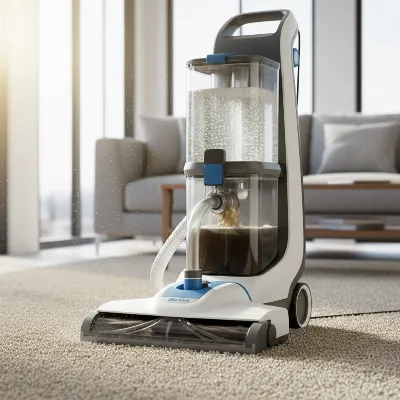
A carpet cleaner is an invaluable tool for maintaining a spotless home, but an unpleasant odor emanating from the machine itself can quickly turn a cleaning session into a frustrating experience. That tell-tale musty, sour, or even chemical smell isn’t just annoying; it often signals a buildup of bacteria, mold, or old detergent residue within the appliance. Ignoring these odors can not only transfer them back to your freshly cleaned carpets but can also impact the machine’s performance and lifespan. Fortunately, restoring your carpet cleaner to its fresh, efficient state is a straightforward DIY task that requires only a few common household items and a bit of your time. This guide will walk you through the essential steps to safely and effectively eliminate those persistent smells, ensuring your machine is ready to tackle the toughest carpet stains without leaving a trace of unpleasantness.
Why Your Carpet Cleaner Develops an Unpleasant Odor
Understanding the source of the smell is the first step towards eradicating it. Carpet cleaners are designed to remove dirt, grime, and spills, but without proper maintenance, they can become breeding grounds for the very issues they are meant to solve. The primary culprits behind a smelly carpet cleaner are excess moisture, trapped debris, and residual cleaning solutions. When moisture lingers in tanks, hoses, and brushes, it creates an ideal environment for mold and mildew to flourish, leading to a distinct musty scent. Additionally, dirt, pet hair, and old detergent can accumulate in crevices and internal components, breaking down over time and producing foul odors. Even traces of pet urine, when reactivated by water, can contribute to a strong ammonia-like smell within the machine.
Essential Cleaning Supplies You’ll Need
Before you begin the deep cleaning process, gather these simple yet effective supplies. Most of these are likely already in your pantry or cleaning cabinet, making this a budget-friendly DIY project.
- White Vinegar: A powerful natural disinfectant and deodorizer due to its acetic acid content.
- Baking Soda: Excellent for absorbing and neutralizing odors.
- Mild Dish Soap: Helps to break down grease and grime. Opt for a clear, fragrance-free version to avoid residue or added scents.
- Warm Water: For rinsing and mixing solutions.
- Microfiber Cloths or Sponges: For wiping down surfaces.
- Small Brushes: A bottle brush, old toothbrush, or a stiff-bristled brush will be useful for scrubbing tight spots and brushes.
- Gloves: To protect your hands from dirt and cleaning solutions.
- Bucket or Large Basin: For soaking removable parts.
- Measuring Cups: For accurate solution mixing.
Step-by-Step Guide to Deep Cleaning Your Smelly Carpet Cleaner
Follow these detailed steps to dismantle, clean, and deodorize every component of your carpet cleaner, ensuring no hidden odors remain.
Empty and Rinse Tanks Thoroughly
|
Our Picks for the Best Carpet Cleaner in 2026
As an Amazon Associate I earn from qualifying purchases.
|
||
| Num | Product | Action |
|---|---|---|
| 1 | BISSELL TurboClean Pet XL Upright Carpet Cleaner, Upholstery Tough Stain Tool & Formula included, 3746 |

|
| 2 | Shark StainStriker Portable Carpet Upholstery & Area Rug Cleaner, Stain & Odor Remover, Perfect for Car Interiors, Nordic Blue, PX202BRN |
|
| 3 | Shark R-EX205 CarpetXpert Carpet, Area Rug & Upholstery Cleaner with StainStriker, Built-in Spot & Stain Cleaner, Teal - Certified , EX200 Series (Renewed) |
|
| 4 | Hoover PowerDash Pet+ Compact Carpet Cleaner Machine, Lightweight Carpet Shampooer Machine, Pair with a Hoover Carpet Cleaner Solution for a Bright, Refreshed Home |
|
| 5 | BISSELL® Little Green® Max Pet Portable Carpet and Upholstery Deep Cleaner, Car/Auto Detailer, with Self-Cleaning Tough Stain Tool and Pet Hair Removal Tool (3860) |
|
| 6 | BISSELL Little Green Mini Portable Carpet and Upholstery Deep Cleaner, Car/Auto Detailer, with HydroRinse Self-Cleaning Tool and 4" Tough Stain Tool, Tea Green, 4075 |
|
| 7 | Kenmore KW4010 Pet Portable Carpet Cleaner Machine with High Cleaning Power, 3.2L Clean Tank & 1.4L Dirty Tank, 25ft Cord Length and Two Easy Removable Brushroll for Rug & Upholstery |
|
| 8 | Hoover PowerDash Pet Advanced Compact Carpet Cleaner Machine with Above Floor Cleaning, Lightweight Carpet Shampooer Machine, Pair with a Hoover Carpet Cleaner Solution for a Bright, Refreshed Home |
|
| 9 | Vacmaster SCB301 400 Series Portable Carpet & Upholstery Spot Cleaner Machine, 15Kpa Power Suction with Versatile Tools for Pets, Area Rugs and Couches |
|
| 10 | Portable Carpet and Upholstery Cleaner, 15Kpa Spot Cleaner Machine for Pets, Furniture Cleaner for Sofa, Area Rugs, Couch and Car, Carpet Cleaning Machine with Dual Brush Heads & Self-Cleaning System |
|
The dirty water tank is often the primary source of odors, as it collects all the extracted grime, pet hair, and stagnant water. Start by emptying both the dirty water and clean water tanks completely. Rinse them several times with warm water, sloshing the water around vigorously to dislodge any loose debris.
Next, fill the dirty water tank halfway with warm water and add about 1/2 cup of white vinegar and a few drops of dish soap. Swish the mixture thoroughly, then let it sit for 15-30 minutes to allow the vinegar to break down residue and neutralize odors. Scrub the inside of the tank with a bottle brush or sponge, paying attention to corners and edges. Rinse thoroughly until no suds or residue remain. Repeat a similar process for the clean water tank, even if it appears clean, to prevent future odor transfer.
Clean Hoses and Attachments
Hoses and small attachments can easily harbor mold, mildew, and residual dirt, contributing significantly to machine odors. Detach all removable hoses, nozzles, and upholstery tools from the main unit. In a bucket or large basin, prepare a solution of warm water and 1 cup of white vinegar. Submerge the hoses and attachments in this solution and let them soak for at least 30 minutes.
For stubborn residue inside hoses, you can gently push a bottle brush through them or flush them with the vinegar solution. Scrub any visible grime from the attachments with a small brush or old toothbrush. After soaking, rinse all components thoroughly under running warm water until they are clean and free of any cleaning solution smell.
Scrub Brushes and Nozzles
The rotating brushes and suction nozzles are constantly in contact with your carpet, accumulating hair, fibers, and dirt that can quickly become a source of stench. Carefully remove the brush roll and nozzle assembly according to your machine’s manufacturer instructions. You may need a screwdriver for some models.
Once removed, pick out any tangled hair, string, or large debris from the brush bristles. Create a paste with baking soda and a small amount of water, or use a mixture of warm water and dish soap. Scrub the brushes vigorously with a stiff-bristled brush, ensuring you get deep into the bristles. For the nozzle, use a small brush to clean any blockages or residue in the suction path. Rinse both components thoroughly until all dirt and cleaning agents are gone.
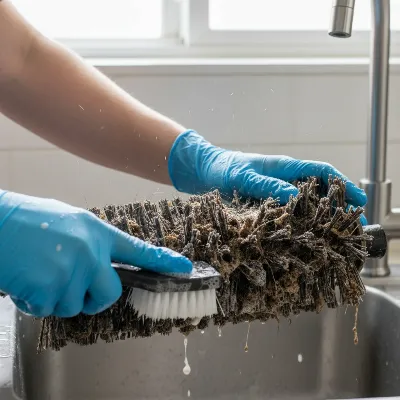 Cleaning a carpet cleaner's brush roll to remove tangled hair and grime.
Sanitize the Internal System
Even after cleaning the external components, the internal pathways and motor area can retain odors. To sanitize the internal system, reassemble the clean water tank. Fill the clean water tank with warm water and add 1 cup of white vinegar (do not add dish soap for this step, as it can cause excessive sudsing in the machine’s internal mechanics).
Run the carpet cleaner with this vinegar solution as if you were cleaning a carpet, but without adding any detergent. You can run it over a patch of old carpet, a garage floor, or simply into a sink or utility tub. This process will flush the internal pump, hoses, and spray jets with the deodorizing solution. Follow this by running a tank of plain warm water through the machine to rinse out any lingering vinegar smell.
Dry All Components Completely
This is arguably the most critical step in preventing future odors. Any residual moisture will lead to mold and mildew growth, undoing all your hard work. After cleaning and rinsing all parts, lay them out to air dry completely.
Ensure good air circulation by placing them in a well-ventilated area, like outdoors on a sunny day (out of direct harsh sunlight to prevent plastic degradation) or indoors with a fan running. It’s best to allow at least 24-48 hours for everything to dry thoroughly, including the main unit itself. Do not reassemble the machine until every component, especially the tanks, brushes, and hoses, feels completely dry to the touch.
Reassemble and Test
Once every part is bone dry, carefully reassemble your carpet cleaner according to the manufacturer’s instructions. Ensure all connections are secure and tanks are properly seated. Before storing, perform a quick test run with plain water to ensure everything is working correctly and there are no leaks. You should notice a significant improvement in the machine’s smell, with any lingering odors replaced by a neutral, clean scent.
Preventive Measures to Keep Your Carpet Cleaner Fresh
Maintaining a fresh-smelling carpet cleaner is an ongoing process. Incorporating a few simple habits into your routine will prevent odors from returning and prolong the life of your appliance.
- Empty and Rinse Immediately After Use: Never leave dirty water in the tank. As soon as you finish cleaning, empty both the clean and dirty water tanks and rinse them thoroughly with warm water.
- Air Dry Components: After rinsing, always allow tanks, hoses, and brushes to air dry completely before reassembling and storing the machine. This prevents moisture buildup and, consequently, mold and mildew.
- Clean Brushes and Nozzles: After each major cleaning session, inspect and clean the brush roll and suction nozzle to remove trapped hair and debris.
- Use Proper Detergents: Always use the manufacturer-recommended cleaning solutions and follow dilution instructions carefully. Using too much detergent or unsuitable products can leave sticky residues that attract dirt and bacteria.
- Regular Deep Cleans: Even with diligent post-use cleaning, performing a full deep clean every few months or after heavy use will keep your machine in top condition.
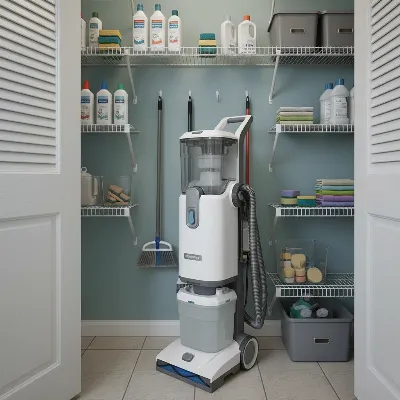 A clean and fresh carpet cleaner stored neatly in a utility closet.
When to Call a Professional or Consider Replacement
While DIY cleaning can resolve most odor issues, there are instances where professional help or a replacement might be necessary. If you’ve meticulously followed all cleaning steps and the persistent, foul odor remains, it could indicate a more serious underlying problem, such as deeply embedded mold in inaccessible internal components or a failing motor that is burning and creating a smell.
Similarly, if the machine shows signs of malfunction, such as weak suction, poor spraying, or unusual noises, alongside the odor, it’s best to consult the manufacturer’s customer service or a qualified repair technician. In some cases, especially with older machines or severe issues, the cost of repair might outweigh the cost of a new, more efficient model.
“A well-maintained carpet cleaner is not only more effective but also contributes to a healthier indoor environment. Most persistent odors can be prevented with simple, consistent post-use care.” – Maria Rodriguez, Home Cleaning Expert
Conclusion
A smelly carpet cleaner can be disheartening, but it’s a solvable problem with a methodical approach. By regularly emptying and rinsing tanks, meticulously cleaning brushes and hoses, and periodically sanitizing the internal system with natural solutions like vinegar and baking soda, you can banish unpleasant odors and ensure your machine operates at its peak performance. Remember, thorough drying is your strongest defense against mold and mildew. Integrating these simple DIY cleaning and maintenance practices will not only extend the life of your appliance but also guarantee that your carpets emerge fresh and truly clean every time. How often do you deep clean your carpet cleaner, and what are your go-to natural deodorizers?
Frequently Asked Questions
Can I use bleach to clean my carpet cleaner?
No, it is generally not recommended to use bleach to clean your carpet cleaner. Bleach can be corrosive to plastic and rubber components within the machine, potentially causing damage and leaks. Furthermore, mixing bleach with residual cleaning solutions could create dangerous fumes. Stick to white vinegar, baking soda, and mild dish soap for safe and effective cleaning.
How often should I deep clean my carpet cleaner?
For optimal performance and odor prevention, it’s recommended to deep clean your carpet cleaner every 3 to 6 months, or more frequently if you use it often, clean heavily soiled areas, or have pets. Regular rinsing and drying after each use are essential daily habits, but a periodic deep clean addresses hidden buildups.
What if my carpet cleaner still smells after cleaning?
If your Carpet Cleaner still emits an odor after a thorough deep clean and drying, inspect all components again for any missed spots. Ensure there is no moisture trapped in intricate parts. If the smell persists, it might indicate a deeper issue like mold within inaccessible parts or an internal malfunction, in which case consulting the manufacturer or considering a replacement might be necessary.